Inchstones, Intelligence, and the Advantage of Adaptive Thinking
Neurodiversity is not a detour. It is a blueprint for better systems.
written by Sarah Kernion of INCHSTONES
There is a particular kind of panic that arrives when your best plan meets a reality that does not care about your plan.
It can happen in a factory when a line stalls and the usual fixes do nothing. It can happen in a conference room when a team keeps missing signals that were obvious in hindsight. It can happen at home at 7:12 a.m., when the morning routine breaks, the clock accelerates, and every instruction you thought was “clear” dissolves into noise.
I did not learn adaptive thinking in a seminar. I learned it in the intimate, relentless classroom of parenting two profoundly non-speaking autistic children. The first lesson was not inspirational. It was mechanical.
If your system depends on a certain kind of brain to make it work, then your system is fragile.
We tend to talk about neurodiversity as a category and a cause. A diagnosis, a deficit, an HR initiative, a training module. But neurodiversity is simpler than that, and more disruptive. It is the natural variation in how human brains are wired, the different ways we think, process, communicate, and experience the world. It is not a problem to solve. It is a fact of life, as ordinary as biodiversity.
Once you see it that way, a shift becomes possible. Difference stops being something to
“manage.” It becomes a design constraint. And design constraints, when taken seriously, tend to make everything better.
Support is often just better design
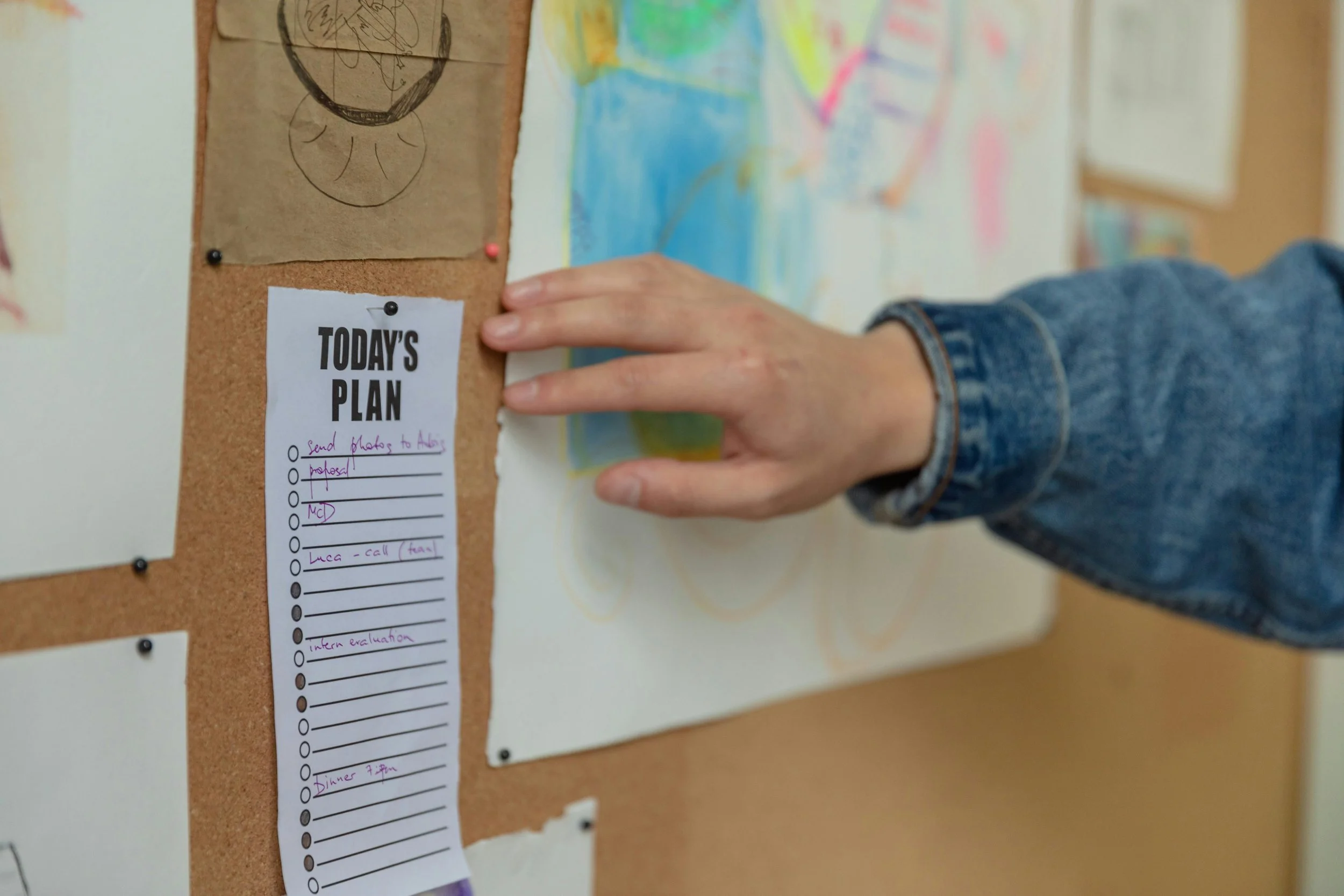
In my home, “support” began with small, unglamorous changes. Visual schedules. Clear transitions. Reduced sensory chaos. Fewer words when words became a flood. Predictability where predictability was possible.
I made those changes for my children. Then I watched them help everyone.
The schedules reduced conflict for the whole family. The clearer cues reduced misunderstandings. The calmer environment lowered the temperature of our mornings. What I thought was accommodation turned out to be good design.
This pattern shows up in organizations all the time, though we rarely name it.
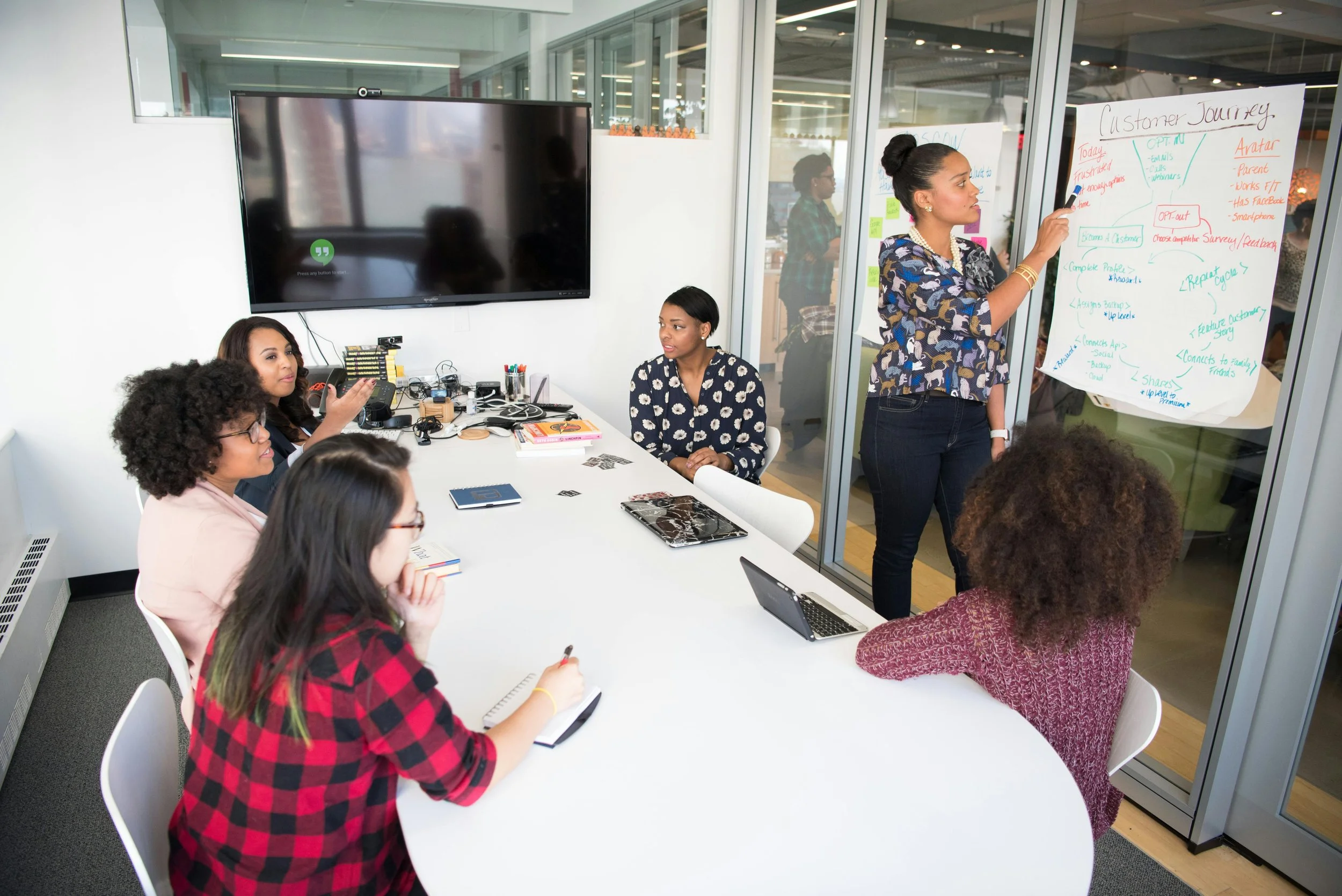
A workplace decides to make instructions more explicit for an employee with ADHD, and productivity rises across the team. A manager begins sending agenda notes in advance to support neurodivergent participants, and meetings get shorter and more decisive. A company reduces sensory overload in shared spaces, and employees report fewer headaches, fewer sick days, less burnout.
The irony is that the “special” supports often reveal what the system needed all along: clarity, stability, and less cognitive tax.
Many organizations treat these changes as concessions. They are not. They are strategic upgrades. They reduce friction. They make performance more repeatable. They widen the band of people who can do excellent work without paying for it with exhaustion.
Neurodiversity, in other words, is a stress test. It reveals whether your environment is humane or merely survivable.
Adaptation is not a motivational slogan
In corporate language, adaptation is a virtue. We say it the way we say “innovation” or “agility,” as if the word itself is a strategy. But adaptation is not something you declare. It is something you practice in contact with reality.
When you live close to neurodivergence, you learn that adaptability is less about attitude and more about feedback. What works? What fails? What changed? What did you miss? What are you assuming that reality is not supporting?
This is why I return to a model from outside the caregiving world, a model built for conflict and uncertainty: the OODA loop, Observe, Orient, Decide, Act.
People often treat it as a tidy four-step checklist. But the point is not the sequence. The point is the loop. It is a living relationship with the environment. You observe what is happening, you orient by interpreting what it means, you decide what to do, you act, and then you face the consequences, which become your next observation.
You do not “run” the loop. You live inside it.
Orientation is the hinge. It is where perception and meaning meet. It is shaped by culture, training, stories, fear, pride, and the invisible habits of thought that feel like “common sense.” Two people can observe the same facts and orient differently, which means they will decide differently, act differently, and learn differently.
This is one reason workplaces struggle. Not because employees are unwilling to adapt, but because they are not orienting to the same reality. They are working from different maps.
Neurodiversity makes that gap visible. It forces the question most organizations avoid: Are we communicating in a way that only one kind of mind can decode?
When you need to break the model before you can improve it
There is another hard truth embedded in adaptive thinking: sometimes you cannot improve a system by adding. Sometimes you have to subtract.
I had to do this with my own expectations. Parenting often comes with a quiet script, a timeline of milestones, a story about progress. When your child does not follow that script, the temptation is to measure them against it anyway and call the difference failure.
At some point, I realized that the script itself was the problem. It was a model that did not fit reality. And as long as I clung to it, it would block my ability to see my children clearly.
Letting go did not lower the standard. It changed the standard from “does this match the expected timeline?” to “is this working in the real world?” That shift is not soft. It is accuracy.
Organizations carry their own scripts. Legacy metrics. Outdated definitions of productivity. Meeting rituals no one believes in, yet everyone continues. Policies that look rational on paper but produce confusion on the ground. A system can appear stable while quietly draining the people inside it.
Adaptive thinking sometimes requires controlled demolition. Retiring the metric that incentivizes the wrong behavior. Killing the process that forces people to perform competence instead of producing results. Ending the meeting that exists mainly to confirm that everyone is still trapped.
Destruction is not chaos. It is space-making. It is the refusal to pretend that a broken model deserves loyalty.
The power of interaction
A fragile system is one in which problems echo in isolation. A resilient system is one in which problems trigger response.
This is another lesson caregiving teaches quickly. When you are alone with too much responsibility, the smallest disruption can become a crisis. When support is distributed and responsive, the system has slack. It can absorb shocks. It can learn.
High-performing organizations build this kind of responsiveness on purpose. They create fast feedback loops. They design environments where a signal can be raised without shame and answered without delay. They make it easy to say, “This is not working,” and safe to mean it.
In practice, this is less about speeches and more about mechanics. Who responds when a frontline employee flags a problem? How long does it take? What happens to the person who raised it? Is the signal honored or punished?
Interaction is the opposite of institutional loneliness. It is how learning becomes normal.
Inchstones: the smallest units of progress
This is where the concept of inchstones enters.
Most of us are trained to chase milestones. Milestones are big, visible achievements. They are tidy. They photograph well. They make for good reports.
But in complex systems, milestones are often too far apart to keep people alive to their own progress. When the goal is distant and the work is hard, the absence of evidence can feel like failure, even when growth is happening in quiet increments.
Inchstones are the smallest measurable signs of forward movement. The micro-wins that prove the system is learning.
At home, an inchstone might be a transition that used to end in collapse and now ends in a breath. A new gesture. A moment of shared attention. Tiny on the outside, life-changing on the inside.
In organizations, inchstones are everywhere if you train yourself to see them. A reduction in rework. A smoother handoff. A process that takes one less step. A team member who asks a better question than they asked last month. A new hire who becomes confident enough to teach.
The distinction matters because milestones measure outcomes, but inchstones measure learning. And learning is the only reliable fuel for sustained performance.
A workplace that only celebrates milestones becomes a place where people feel invisible between achievements. A workplace that notices inchstones becomes a place where people can endure complexity without losing morale.
Morale is not a perk. It is a performance resource. When people believe progress is possible, they take intelligent risks. They report problems sooner. They keep their minds online. When people believe progress is impossible, they conserve energy, hide errors, and disengage.
Inchstones are not sentimental. They are operational.
Inclusive design is precision, not politeness
There is a persistent misconception that inclusion is an act of kindness that competes with efficiency. In reality, inclusion is often the path to a cleaner, sharper, more precise system.
Designing for neurodivergent brains forces specificity. It reduces ambiguity. It surfaces hidden assumptions. It makes the work less dependent on mind-reading and more dependent on clear signals.
This is not about lowering standards. It is about building environments where more people can meet high standards without burning out.
Think about the best systems you have experienced. The onboarding that does not require you to guess what success looks like. The manager who communicates in concrete terms. The team that defines “done” so clearly that rework becomes rare. The workplace where the physical environment supports attention rather than draining it.
Those are inclusive environments, whether or not the organization calls them that. They are also high-performance environments.
When we design for difference, we tend to discover something humbling. Many of the barriers neurodivergent people face are not “personal limitations.” They are design failures, quietly endured by everyone else.
Fixing them is not charity. It is competence.
The question adaptive leaders ask
Adaptive thinking is not the ability to tolerate chaos. It is the ability to reduce unnecessary chaos and respond intelligently to the chaos you cannot avoid.
It begins with a posture: observe reality without flinching, orient without ego, decide without delay, act, and then learn.
It continues with a commitment: build systems that distribute support, honor signals, and make progress visible in small increments.
And it is sustained by a habit that sounds simple but changes everything: noticing inchstones.
If you lead people, there is a question worth asking yourself this week. Not a grand question about vision or transformation. A smaller, sharper one.
What is one inchstone you can create by Friday?
Not a slogan. Not a promise. A measurable improvement that reduces friction, increases clarity, or makes the work easier to do well. One change that proves your system can learn.
In a world that keeps accelerating, the advantage rarely belongs to the organization with the most certainty. It belongs to the organization that can stay in the loop, keep adapting, and keep its people human while it does.

Sarah Kernion is the founder of INCHSTONES, a writer, and podcast host known for reframing neurodiversity as a practical advantage in how people and organizations adapt. As the mother of two profoundly non-speaking autistic children, she brings a grounded lens to human performance—showing how environments designed for different brains reduce friction, increase clarity, and help teams respond well when conditions change. Her signature keynote, “Inchstones, Intelligence, and the Advantage of Adaptive Thinking,” blends lived experience with actionable frameworks for adaptive decision-making, momentum, and resilient execution. Sarah speaks to leaders and teams across industries on designing for reality, building durable cultures, and turning small wins into sustained progress.